If your homemade vegan dinner tastes good but still leaves you reaching for cereal, toast, or a delivery app an hour later, the issue may be texture rather than flavor. Research on satiety suggests that foods with more structure and higher viscosity tend to feel more filling than thin or liquid foods, though the effect is modest and varies by person. The money angle matters too: when dinner feels incomplete, households often patch the gap with extra snacks or takeout, and EPA estimates wasted food costs the average US consumer $728 a year, or $2,913 for a household of four. (pmc.ncbi.nlm.nih.gov)
Usually the fix for a better way to create meat alternatives is to fix the way we construct them. To create a structure that is more pleasing to eat, the fastest way to do that is with a simple tool called 4C Satisfaction Check. Before adding more ingredients, ask yourself if you have the following structures in your meal: We’ve got your ability to chew; we’ve got a crisp texture; therefore, a creamy body; and thus, your meal will contrast with the other textures in the meal. Most disappointing vegan meals lack at least two of these.
TL;DR
- Homemade vegan food often feels unsatisfying when every component is soft, wet, and similar.
- Use the 4C Satisfaction Check: Chew, Crisp, Creamy, Contrast.
- A meal that scores 6 to 8 out of 8 usually feels more complete than a 3 or 4.
- Spend a little on structure, such as slaw, seeds, thick sauce, or better-cooked tofu, before you spend a lot on branded substitutes or takeout.
- If texture improves but hunger does not, review protein, total portion size, and B12 planning. (myplate.gov)
Why the usual homemade vegan meal falls flat
Inherently, because vegan cooking tends to be composed of soft textures (dried beans, lentils, rice, pasta, oatmeal, roasted vegetables, soup, stew, hummus, and blended sauces), this can lead to an issue when four or five soft items are placed together and labelled as complete.
When a meal is mostly spoon-soft and uniform, you can eat it quickly, and each bite feels almost the same as the last. Texture research points in the same direction: food form, viscosity, and oral processing all influence hunger, fullness, and how much food feels like enough before you stop eating. Solid and thicker foods generally do a better job than thin, drinkable ones, but the effect is modest, not magic. (pmc.ncbi.nlm.nih.gov)
There’s also a reason why restaurant bowls made from your favourite ingredients tend to taste better than the same product prepared at home. A typical restaurant bowl might contain charred food, raw garnish (to keep it fresh), thick sauce, crunchy items and different temperatures. On the other hand, a bowl made at home would have been steaming (from cooking), due to soggy grains and beans and vegetables themselves. The same also applies to dressings; they would have had less ‘body/lumpiness’ than the types found in restaurants, therefore would have created a looser dressing than in a restaurant.
The 4C Satisfaction Check
The standard is that to be considered a vegan meal, you must have at least three of the four “Cs.” However, it’s best if the main meal has all four. You don’t need to be fancy with the components of the meal; instead focus on providing each individual component with its own function so they work together to create a complete meal.
| 4C factor | What it does | Budget fixes | Approx. extra cost per serving |
|---|---|---|---|
| Chew | Creates a real bite and slows the meal down | Pressed tofu, browned mushrooms, roasted chickpeas, farro, tempeh | $0.60 – $1.50 |
| Crisp | Adds crunch and keeps the plate from feeling wet | Cabbage slaw, toasted seeds, breadcrumbs, radish, crisped onions | $0.10 – $0.40 |
| Creamy | Gives the meal body without turning it soupy | Hummus, mashed white beans, thick tahini sauce, avocado mash | $0.20 – $0.80 |
| Contrast | Makes each bite feel different | Raw plus roasted vegetables, hot grains plus cold pickles, cubes plus ribbons | $0.15 – $0.60 |
Assign 0-2 points for each category. 0 means absence; 1 indicates presence but weak; 2 indicates immediate recognition within first 3 bites of the meal. Dinners with scores 6-8 tend to feel complete. Dinners with scores 4-5 need only an additional texture; dinners scoring 0-3 often lead to asking for seconds (chips, toast, dessert), or placing an order for delivery later.
Water is the silent texture killer
Water is a key contributor to the downfall of an excellent vegan dish. Tofu is stored in lots of water, canned beans are stored in water, frozen veggies leak moisture, roasted vegetables steam after being removed from the oven and at the end of it all, the dish is covered with an additional liquidy sauce. The end result is a well seasoned bowl of food, but one that feels watery.
- Dry or drain ingredients before cooking if the goal is browning.
- Cook mushrooms, tofu, and vegetables in batches when needed so they roast instead of steam.
- Keep sauces thick and add them at the end; a sauce that clings supports texture, while a sauce that pools erases it.
- Store crunch separately if the meal will sit longer than a few minutes.
What the 4Cs look like in real dinners
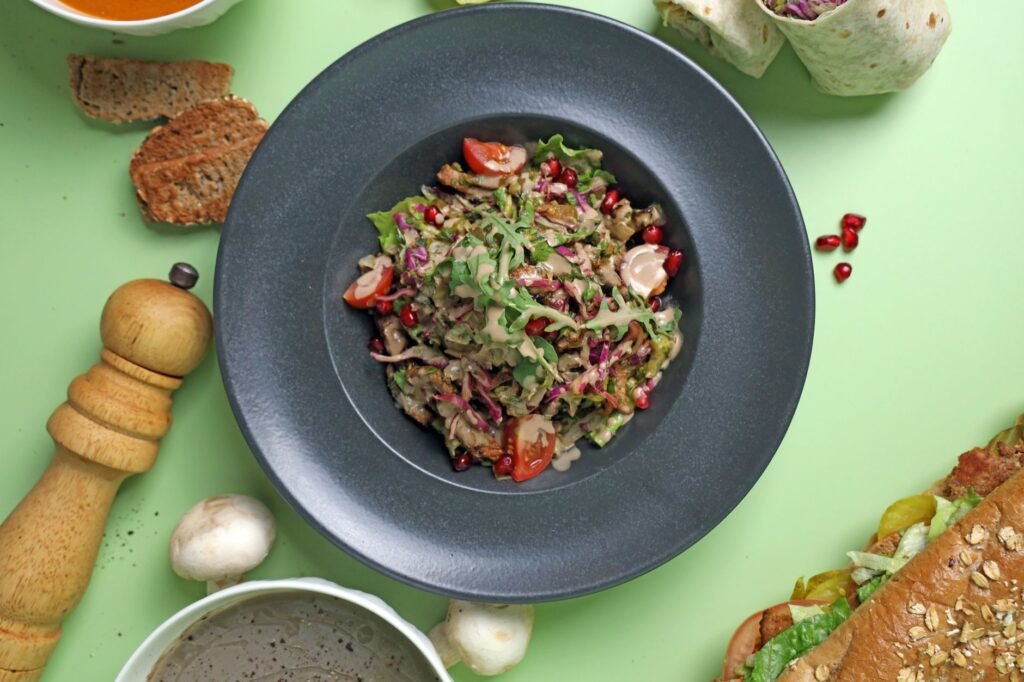
- Grain bowl: chewy tofu or farro, shredded cabbage, thick tahini sauce, and hot grains with cold pickles.
- Pasta: browned mushrooms or lentils, toasted breadcrumbs, a silky bean-based sauce, and a handful of raw arugula or lemon zest at the end.
- Soup or stew: a thicker base, crisped chickpeas or croutons, a dollop of yogurt-style topping or white bean puree, and a sharp herb salad on top.
- Tacos or wraps: seared filling, crunchy slaw, a spread that stays in place, and pickles or onions for snap and acid.
A budget example: spend $1.76 more, skip the second dinner
Imagine a weeknight bowl for one. Version A uses 1 cup cooked rice ($0.28), 1/2 can black beans ($0.55), roasted zucchini and peppers ($1.25), and bottled dressing ($0.35). Total: $2.43. Version B cuts the rice to 1/2 cup ($0.14), swaps in 7 ounces of pressed tofu ($1.75), keeps charred broccoli ($0.95), adds cabbage slaw ($0.45), thick tahini-lemon sauce ($0.52), toasted sunflower seeds ($0.18), and pickled onions ($0.20). Total: $4.19. The second bowl costs $1.76 more upfront, but if it helps prevent even one $14 takeout meal or two $2 snack runs later in the week, it is the cheaper dinner. These are illustrative home-cost estimates, but they reflect a common budgeting reality.
It is not about having fancy meals or costly meals but having the additional cost of producing a product put into the structural (not just the arbitrary amount of food produced). A
little bit of seeds and a little bit of cabbage can provide more satisfaction than an additional cup full of rice that is already soft.)
How to rebuild texture without turning dinner into a project
- Pick the chew anchor first. Extra-firm tofu, browned mushrooms, lentil patties, tempeh, or grains with bite such as farro give the meal a center.
- Create dry surface area. Press tofu, pat beans dry, spread vegetables out, and use enough heat to brown instead of simmer.
- Choose one crisp finish. Shredded cabbage, toasted breadcrumbs, pepitas, radishes, or roasted chickpeas all work.
- Make the creamy part thick. Use hummus, mashed beans, avocado mash, or tahini sauce that coats the fork rather than runs to the bottom of the bowl.
- Build contrast at the very end. Add herbs, pickled onions, cucumbers, lemon, or a cool crunchy salad right before serving.
If tofu is your anchor, technique matters. Illinois Extension notes that pressing helps tofu hold its shape and get crisp, and Oregon State Extension notes that frozen tofu develops larger holes and a more open, chewier texture after thawing. That means one low-cost block of tofu can give you two very different eating experiences depending on how you handle it. (eat-move-save.extension.illinois.edu)
Common mistakes that make vegan food feel unfinished
- Using soft tofu when the dish needs edges and chew.
- Crowding a sheet pan or skillet, which traps steam and prevents browning.
- Adding sauce too early, then wondering why the crisp bits disappear.
- Making every component the same size, temperature, and moisture level.
- Relying on a giant portion of grains to make the meal feel substantial.
- Treating garnish as optional when the garnish is the missing texture.
- Skipping salt or acid on crunchy elements, so they taste dry instead of lively.
Where the strategy hits its limit
Texture can rescue a meal that tastes good but feels vague. It cannot fix a dinner that is simply too small or too low in protein, fat, or overall calories. USDA MyPlate includes beans, peas, lentils, nuts, seeds, and soy products in the protein foods group, so make sure your bowl has a real anchor instead of just vegetables and starch. (myplate.gov)
And if you eat fully vegan, texture is only part of the conversation. NIH says vitamin B12 is not naturally present in plant foods, though some breakfast cereals and nutritional yeasts are fortified, and people following vegetarian or vegan eating patterns have a higher deficiency risk because natural sources are limited to animal foods. Fortified foods and supplements can reduce that risk. (ods.od.nih.gov)
How to pressure-test the idea at home
- For 7 dinners, score Chew, Crisp, Creamy, and Contrast from 0 to 2.
- Write down dinner cost and whether you needed a follow-up snack within 90 minutes.
- Note what you actually wanted afterward: more calories, more crunch, something salty, or dessert.
- Track waste. If slaw, herbs, or crunchy toppings keep getting tossed, buy smaller amounts or use them across multiple meals.
- Change one variable at a time. First increase chew, then crisp, then sauce thickness, then portion size.
This matters because the best texture strategy is the one you can repeat without wasting food. EPA recommends planning meals around what you already have and storing food intentionally to reduce waste. If your crisp add-ons wilt before you use them, keep them dry and separate, or switch to sturdier options such as cabbage, carrots, toasted seeds, or breadcrumbs. (epa.gov)
Bottom line
Homemade vegan food often leaves you feeling unfulfilled because most meals consist of soft foods that do not have any contrasting textures. You can easily fix this by using less elaborate and affordable ingredients or recipes. To ensure that you create a complete meal out of your vegan dinners and not just a starter course, simply use one chewy texture, one crunchy texture, one creaminess, and one clear contrasting element for each of your meals.
FAQ
Is tofu the only affordable way to make a vegan meal feel substantial?
No. Tofu is useful, but it is just one chew anchor. Beans, lentils, tempeh, browned mushrooms, nuts, seeds, and grains with more bite can all help. USDA includes beans, peas, lentils, nuts, seeds, and soy products in the protein foods group. (myplate.gov)
Why do smoothies, soups, and soft bowls sometimes leave me hungry faster?
Texture is part of the reason. Research suggests that solid and more viscous foods generally create stronger satiation than liquid or low-viscosity foods, though the effect is modest and not universal. (pmc.ncbi.nlm.nih.gov)
Do I need expensive vegan meat substitutes to fix this?
Generally not. When home chefs want to improve the actual structure of their dish (like adding a little crunch to a salad), toasted garnishes, thicker sauces, and better browning techniques will give you more benefit than using the most expensive prepackaged containing product available at an unreasonable cost. Review the 4C score before purchasing an expensive substitute.
Does freezing tofu really change the texture?
Yes, often in a useful way. Oregon State Extension notes that frozen tofu develops larger visible holes and a more open texture, which many cooks experience as chewier after thawing and pressing. (extension.oregonstate.edu)
Can a vegan meal be satisfying without anything crunchy?
Yes. Crisp helps, but the bigger goal is variation. A plate with chewy farro, seared mushrooms, thick white bean puree, and raw fennel can feel complete even if it is not loudly crunchy.
What if I improve texture and still feel hungry?
Then review the basics. Add a clearer protein portion, enough overall calories, and an intentional B12 source if you eat fully vegan. NIH notes that plant foods do not naturally contain vitamin B12 unless they are fortified, and fortified foods or supplements can help reduce deficiency risk. Persistent hunger or fatigue deserves professional guidance. (ods.od.nih.gov)
References
- US EPA – Estimating the Cost of Food Waste to American Consumers – https://www.epa.gov/land-research/estimating-cost-food-waste-american-consumers
- US EPA – Preventing Wasted Food At Home – https://www.epa.gov/recycle/preventing-wasted-food-home
- Scientific Reports / PMC – Food Texture Influences on Satiety: Systematic Review and Meta-Analysis – https://pmc.ncbi.nlm.nih.gov/articles/7395742/
- USDA MyPlate – Protein Foods – https://www.myplate.gov/web/web/eat-healthy/protein-foods
- NIH Office of Dietary Supplements – Vitamin B12 Health Professional Fact Sheet – https://ods.od.nih.gov/factsheets/VitaminB12-HealthProfessional/?uid=a77019308a8b2s16
- Oregon State University Extension – Tofu Basics – https://extension.oregonstate.edu/newsletter/food-hero-monthly/tofu-april-2018
- Illinois Extension – All About Tofu – https://eat-move-save.extension.illinois.edu/blog/all-about-tofu