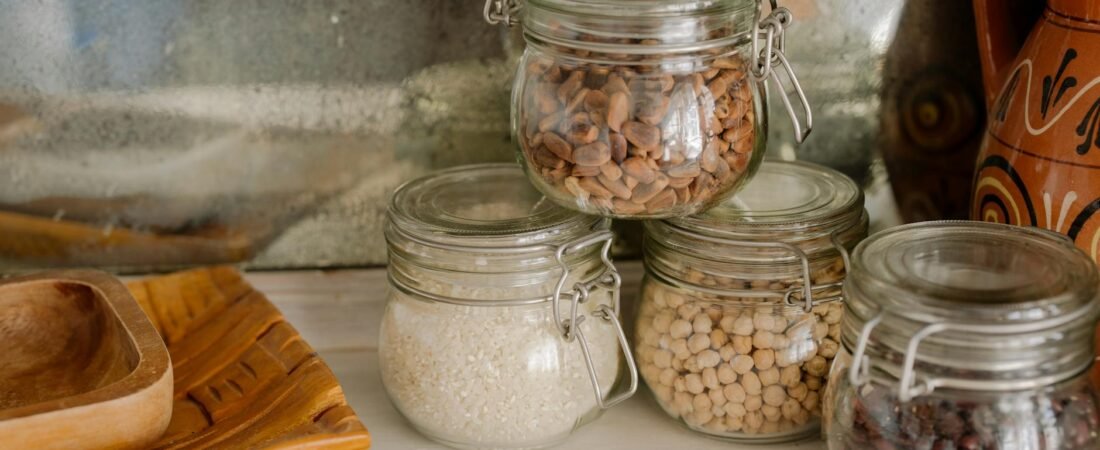
Many resources on plant-based cooking suggest cooking with a focus on protein. Although this is important, the reason your meal was not successful may not stem from a lack of protein. Most of the time, the ingredients you used were perfectly healthy; yet they taste bland with little or no depth. Beans are present; grains are present, and vegetables are present but there is just no depth to them.
That is also where grocery money gets wasted. When meals keep coming out bland, shoppers often respond by buying more specialty vegan products, more bottled sauces, or more convenience foods. A better fix is a short list of pantry ingredients that do specific jobs: deepen savoriness, add body, brighten heavy food, and make simple staples feel worth eating. USDA MyPlate recognizes beans, peas, lentils, nuts, seeds, and soy products as vegetarian protein options, and it notes that beans, peas, and lentils can count in both the Protein Foods Group and a vegetable subgroup. The issue is usually not whether plant foods exist. It is whether you know how to season them well. (myplate.gov)
- If your meals taste bland, buy for flavor function first: savory depth, body, brightness, and aroma.
- Use the SAVOR Shelf Test in this article before adding a new pantry item to your cart.
- Tomato paste, soy sauce or tamari, miso, nutritional yeast, tahini or peanut butter, vinegar, and a smoke-or-warm spice usually do more work than niche vegan products.
- A small flavor basket can be cheaper than repeatedly replacing unsatisfying meals with new convenience foods.
- Check sodium labels on condiments and canned goods, and store pantry items correctly so savings do not turn into waste.
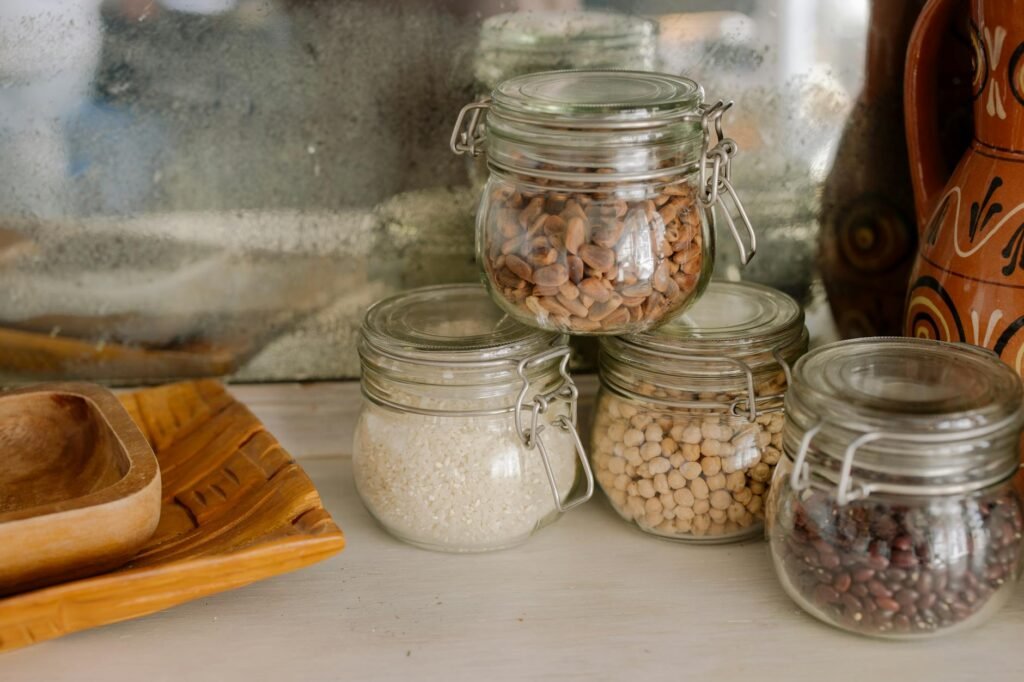
The real problem is flavor architecture
A satisfying plant-based meal will be more than just filling; it will have a foundation. Practically speaking, this means there should be some combination of savory flavor concentration; rich, creamy texture; acidity; aroma; and texture. For example, you may consider a bowl of lentils and brown rice as a complete meal if it has a smoky, tomato base, a dollop of tahini (yogurt would work too), some vinegar, and something crispy sprinkled on top. If you only season your lentils/rice with salt at the end of preparation, your meal will likely be considered less than adequate.
This is favorable for those shopping on a budget since “flavor architecture” typically costs less than novelty items. A canister or tube of tomato paste, a bottle of lower sodium soy, and a jar of peanut butter will save you many dinners, though a freezer can be filled with underwhelming single-use items.
Use the SAVOR Shelf Test before you buy
To keep this practical, use this article’s SAVOR Shelf Test. Before you buy a pantry item, ask whether it earns its space by doing real work in several meals, not just one aspirational recipe.
- S – Savory impact: Does a spoonful noticeably deepen the dish?
- A – All-purpose range: Can you use it in at least three kinds of meals, such as soups, grain bowls, pasta, or stir-fries?
- V – Value per use: Is the cost per dinner low enough that you will not hesitate to use it?
- O – Open-and-keep friendly: Will it store well enough that you can finish it before it goes stale or spoils?
- R – Rescue factor: Can it improve bland food fast, without a long recipe or an extra shopping trip?
When an item receives 4 out of 5 on a rating, it might be worth keeping in the pantry. When it gets 2 out of 5, then it is most likely not worth buying unless it is something unique. This rating system allows you to avoid filling your pantry with various items that otherwise might be bought just based on the thought of them being used.
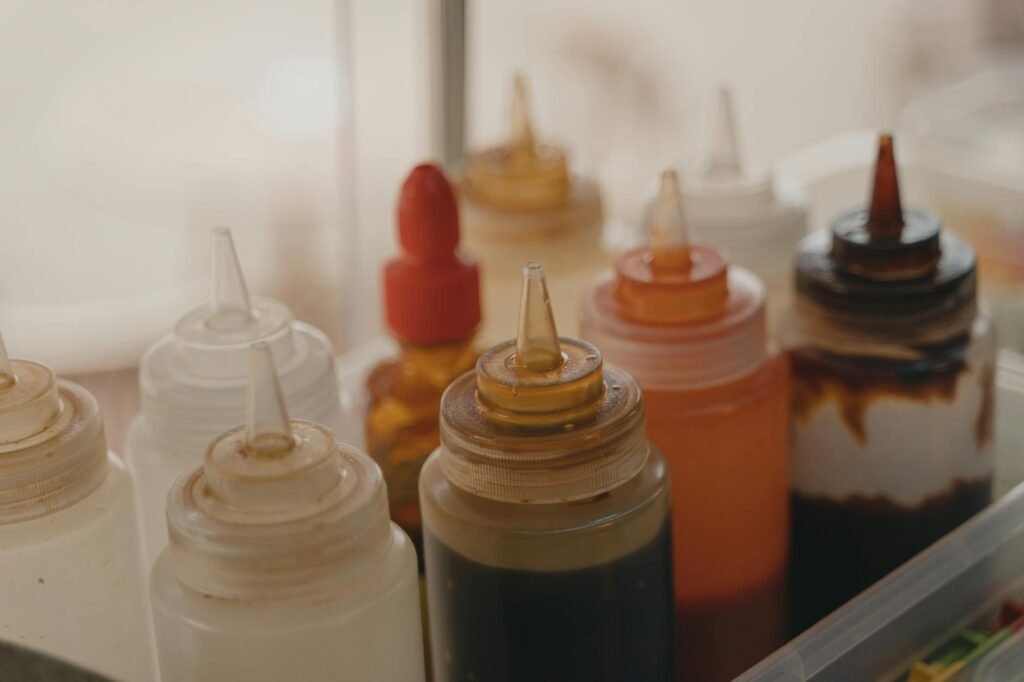
What to buy first, based on what your food is missing
| If your food tastes like this | Buy this first | What it adds | Budget backup | Watch-out |
|---|---|---|---|---|
| Flat, watery, or weak | Tomato paste | Concentrated savory sweetness and color | Cooked-down canned tomatoes | Bloom it in oil for 30 to 60 seconds so it tastes deep, not raw |
| Salty enough but still thin | Miso | Round savoriness and gentle tang | Tomato paste plus a splash of vinegar | A little goes far, and sodium can add up |
| Savory but not exciting | Soy sauce or tamari | Fermented depth, salt, and better browning | Reduced-sodium soy sauce | Condiments can push sodium higher than you think |
| Creamy dishes that still feel dull | Nutritional yeast | Nutty, savory finish | Toasted ground seeds or nuts | Buy a small package first if you are unsure you like the flavor |
| Beans or grain bowls feel lean | Tahini or peanut butter | Body, richness, and sauce texture | Sunflower seed butter | Thin with warm water before mixing so it coats evenly |
| Heavy, muddy, or one-note | Rice vinegar or red wine vinegar | Brightness and contrast | Lemon juice if you keep it on hand | Add near the end and stop when the dish wakes up |
| Savory but dusty or boring | Smoked paprika or cumin | Aroma and warmth | Curry powder or chili flakes | Old spices lose impact, so replace them when they smell weak |
One caution: the most useful vegan flavor boosters are often condiments, and condiments are a common place for sodium to pile up. FDA says most dietary sodium comes from packaged and prepared foods, not the salt shaker, so it is worth comparing labels instead of assuming the more expensive bottle is better. (fda.gov)
A realistic budget example: a $4.52 flavor rescue
Consider a two-adult household that already has basics like pasta, rice, canned beans, frozen vegetables, oil, and salt, but keeps turning out meals that are edible rather than satisfying. A small flavor basket can change that. In the online listings reviewed for this piece in May 2026, Great Value tomato paste 6 oz was listed at $0.86, Great Value Less Sodium Soy Sauce 15 fl oz at $1.68, and Great Value Natural No Stir Creamy Peanut Butter 16 oz at $1.98. Total: $4.52. That is enough to build a tomato base, a quick soy glaze, and a creamy peanut sauce for several dinners. (walmart.com)
If that pantry also needs a protein anchor, a Target listing showed Good & Gather dry lentils at $1.99 per pound, while another showed Good & Gather low-sodium black beans at $0.99 for 15.5 ounces. That would bring the add-on total to $6.51 with lentils or $5.51 with canned beans. Prices vary by store, region, and pack size, but the budgeting lesson is straightforward: depth often costs less than starting over with a different meal plan. (target.com)

The two-minute rescue sequence for weeknight dinners
- Start with one depth builder: tomato paste, miso, soy sauce, or nutritional yeast. Pick one, not three.
- Add one body builder: tahini, peanut butter, coconut milk, or olive oil. This helps food feel more complete, not just more seasoned.
- Add one bright note near the end: a splash of vinegar or another acid. This is often the difference between dull and vivid.
- Add aroma: smoked paprika, cumin, garlic powder, black pepper, or chili flakes. Aroma makes food taste more finished.
- Finish with contrast if possible: toasted seeds, crispy chickpeas, bread crumbs, or chopped pickles. Satisfaction is partly about texture, not just flavor.
If you remember nothing else, remember this order: depth, body, brightness, aroma. That sequence is faster and cheaper than randomly throwing sauces at dinner.
When the pantry still is not enough
On occasion, you may find yourself faced with a pantry issue but then realize that it’s really a cooking method problem. If your veggies/vegetables produce an excessive amount of moisture, if your onions don’t brown completely, or if the stew doesn’t reduce properly – all good kitchen staples can become invisible in your finished dish. Before going out and purchasing another ingredient, consider whether you needed to cook it longer or add too much liquid to the dish.
- If the food tastes watery, simmer uncovered longer before seasoning again.
- If beans or lentils taste chalky, they may need more cooking before you judge the flavor.
- If you are avoiding soy, lean harder on tomato paste, dried mushrooms, nutritional yeast, tahini, peanut butter, and vinegar.
- If miso is out of budget, combine tomato paste with a little soy sauce and an acid for a similar depth-building effect.
- If you need lower sodium, shift more of the flavor load to vinegar, spices, garlic, and toasted ingredients, and compare labels on canned goods and condiments. FDA notes that % Daily Value helps you compare sodium, and that condiments can add up quickly. (fda.gov)
Back up options are essential when it comes to pantry cases, as most pantries fail when there is a reliance on one single-niche ingredient. If your total cooking routine ceases to function because you run out of white miso, your pantry system is too fragile. A healthy pantry should include substitute products.
Common mistakes that make vegan food taste thin
- Buying heat without buying depth. Chili flakes are useful, but they do not replace savoriness.
- Adding acid too early, then cooking it away. Vinegar does more for finished flavor near the end.
- Using only sweet bottled sauces. Sweetness can make a dish feel heavy if there is no acid or fermented note.
- Expecting beans, rice, and vegetables to carry dinner with only salt. They usually need one concentrated pantry booster.
- Skipping texture. Even a great sauce can feel monotonous if the whole bowl is soft.
- Buying five new products at once. Test one new staple at a time so you know what is actually helping.
- Letting spices go stale for years. A spice drawer that smells like dust cannot rescue anything.
Storage and label checks that save money, too
The money-saving version of a vegan pantry is not just about what you buy. It is also about not wasting it. USDA’s Food Safety and Inspection Service says shelf-stable foods include rice, pasta, flour, sugar, spices, oils, dried beans and peas, canned foods, and aseptic packages. It advises storing them in a cool, dry place and not buying cans that are bulging, rusted, leaking, or deeply dented. FSIS also notes that opened low-acid canned goods such as beans, soups, corn, carrots, peas, pumpkin, and pasta products are generally good for 3 to 4 days in the refrigerator, while high-acid canned goods are typically good for 5 to 7 days. FoodKeeper is the USDA-backed tool for checking storage guidance and cutting waste. (fsis.usda.gov)
FDA says more than 70% of dietary sodium comes from packaged and prepared foods, the Daily Value for sodium is less than 2,300 mg per day, and rinsing sodium-containing canned foods such as beans can remove some sodium. FDA also explains that low sodium means 140 mg or less per serving, while reduced sodium means at least 25% less sodium than the regular product. For a vegan pantry, that makes label-checking especially useful on canned beans, broths, bouillon, soy sauce, jarred sauces, and seasoning blends. (fda.gov)
How to pressure-test your pantry before you buy more
- Cook one plain batch of lentils, beans, or a pot of rice.
- Split it into four small bowls.
- Season bowl one with tomato paste cooked in a little oil and a pinch of salt.
- Season bowl two with soy sauce and a few drops of vinegar.
- Season bowl three with peanut butter or tahini loosened with warm water, plus garlic or pepper.
- Season bowl four with miso or nutritional yeast, depending on what you already own.
- Taste side by side and write down which bowl made you want a second bite. That is the flavor job your pantry is missing.
This is the fastest way to stop shopping by vibe. Once you know whether your food needs depth, richness, or brightness most, your next purchase becomes more obvious.
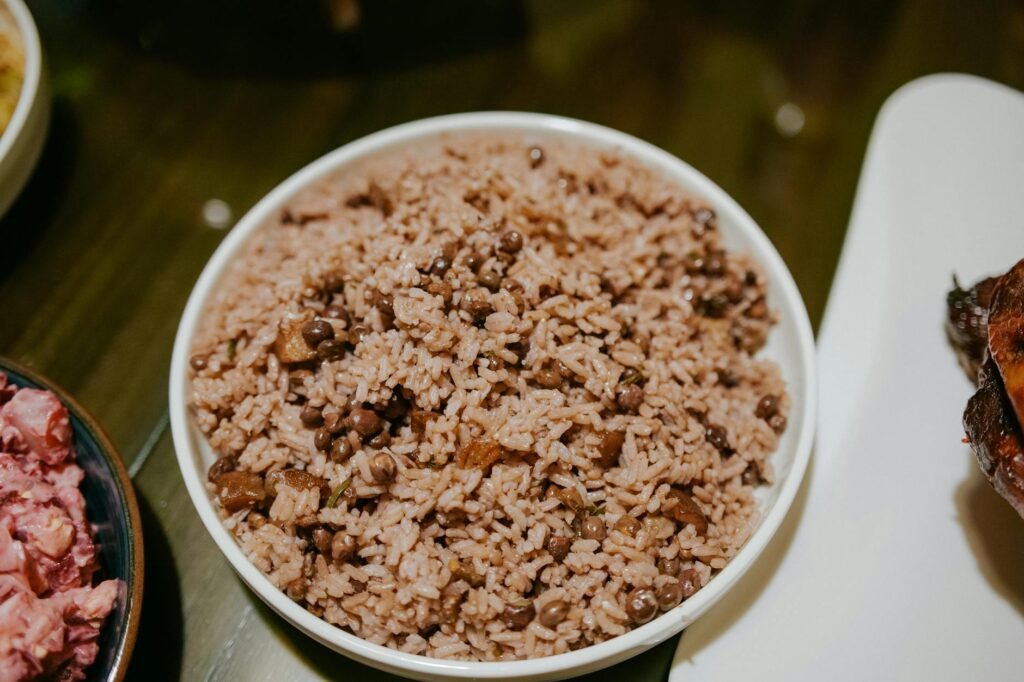
Generic information only: consult a clinician or registered dietitian to verify that any of these basic items will fit into your diet if you are diagnosed with kidney disease, on a medically imposed low-sodium diet, have celiac disease or have allergies to soy, peanuts, or sesame.
Bottom line
A vegan pantry shouldn’t just be the one with the most products, it should also be built on the right jobs. A few key staples can provide you with a depth of flavour and body through savoury richness, brightness, and aroma. Use the SAVOR Shelf Test as a guideline to keep yourself disciplined, do your taste testing on the stove before you purchase anything, and tip: a less expensive spoonful of the right ingredient can often provide a greater amount of flavour than an expensive shortcut.
FAQ
What are the first three vegan pantry staples to buy if my food tastes bland?
In order to have rich flavor, salted fish fermented and thickness, first have your tomato paste, soy sauce or tamari and then either peanut butter or tahini. If you already take care of these, your second purchase should be a type of miso or nutritional yeast.
Are canned beans a compromise, or should I always buy dry?
Canned beans are a practical option. USDA MyPlate counts beans, peas, and lentils as part of both healthy protein choices and a vegetable subgroup, and FDA notes that rinsing sodium-containing canned beans can remove some of the sodium. Dry beans can be cheaper per serving, but canned beans often win on convenience. (myplate.gov)
How do I keep vegan pantry staples safe and reduce waste?
Store shelf-stable foods in a cool, dry place, avoid damaged cans, and refrigerate opened canned foods promptly. FSIS provides general time frames for opened canned goods, and the USDA-backed FoodKeeper tool is useful when you want item-specific storage guidance. (fsis.usda.gov)
I need lower-sodium flavor boosters. What should I use?
Lean more on vinegar, garlic, smoked paprika, black pepper, toasted seeds, and nutritional yeast, and compare labels on canned goods and condiments. FDA says the Daily Value for sodium is less than 2,300 mg per day and explains how low-sodium and reduced-sodium claims work, which makes label reading a worthwhile habit. (fda.gov)
Do I need expensive meat alternatives to make plant-based meals satisfying?
Not usually. USDA lists beans, peas, lentils, nuts, seeds, and soy products as vegetarian protein options. In many kitchens, the bigger upgrade comes from seasoning those basics better, not replacing them with higher-cost specialty products. (myplate.gov)
References
- FDA: Sodium in Your Diet – https://www.fda.gov/Food/ResourcesForYou/Consumers/ucm315393.htm
- USDA MyPlate: Protein Foods Group – https://www.myplate.gov/eathealthy/protein-foods/protein-foods-nutrients-health?post=08132019a
- USDA MyPlate: Beans, Peas, and Lentils – https://www.myplate.gov/beans-and-peas
- USDA FSIS: Shelf-Stable Food Safety – https://www.fsis.usda.gov/food-safety/safe-food-handling-and-preparation/food-safety-basics/shelf-stable-food
- USDA WIC Works: FoodKeeper – https://wicworks.fns.usda.gov/resources/foodkeeper
- Walmart: Great Value Tomato Paste, 6 oz – https://www.walmart.com/ip/10415519?selected=true
- Walmart: Great Value Less Sodium Soy Sauce, 15 fl oz – https://www.walmart.com/ip/15056122?athAsset=eyJhdGhjcGlkIjoiMTUwNTYxMjIiLCJhdGhzdGlkIjoiQ1MwNTV%2BQ1MwMDQiLCJhdGhlZSI6eyJhIjoxMzEuNDYsImIiOjU1MDIuNSwidyI6MC4wMjQwMjA4Nzc1MzcyMTk5MywibCI6MC41fSwiYXRocG9zYiI6IjAiLCJhdGhhbmNpZCI6IjEwNDUyOTE4IiwiYXRocmsiOjAuMH0%3D
- Walmart: Great Value Natural No Stir Creamy Peanut Butter, 16 oz – https://www.walmart.com/c/kp/creamy-peanut-butter-great-value
- Target: Dry Chickpeas Garbanzo Beans – 1lb – Good & Gather – https://www.target.com/p/-/A-54600464
- Target: Organic Low Sodium Chickpeas Garbanzo Beans – 15oz – Good & Gather – https://www.target.com/p/-/A-78654074