By Lena Brooks
If your vegan meals lean on rice, beans, lentils, tofu, pasta, potatoes, or frozen vegetables, the savings are easy to see. The harder part is keeping dinner from tasting like the same bowl in different colors. That flat, one-note result usually is not a vegan food problem. It is a flavor-structure problem. USDA food plans note that healthy meals can be built at different cost levels, and MyPlate treats beans, peas, lentils, nuts, seeds, and soy products as plant-protein options. The practical takeaway is simple: you do not need expensive specialty products to make vegan food satisfying, but you do need a better seasoning system. (fns.usda.gov)
TL;DR
- One-note vegan food usually lacks contrast, not just salt.
- Use the 5-Lane Flavor Check: salt, savory depth, acid, aroma, and texture or heat.
- Pick one clear savory anchor, then add brightness and a fresh or crunchy finish.
- Taste in stages instead of dumping in more of the dominant spice.
- If a dish is still dull, the problem may be excess water, weak browning, or old spices rather than seasoning alone.
Why vegan meals go flat so often
Flavor is bigger than salt. According to the National Institute on Deafness and Other Communication Disorders, what people perceive as flavor is a combination of taste, aroma, and sensations such as heat, coolness, and texture. That matters in vegan cooking because many budget-friendly staples are mild by design: beans, rice, oats, potatoes, and tofu deliver substance more than automatic intensity. If every component is soft, beige, and seasoned the same way, dinner reads as flat even when the ingredients themselves are fine. (nidcd.nih.gov)
One grocery shopping mistake people make is getting an extra bottle of sauce to resolve the “problem.” In most cases, your dish only has one flavour profile (one spice mix plus one spice) which could be causing it to taste bland. For example: cumin does not have any acidity, it will taste dusty; soy sauce does not have any aromatic qualities, it will typically taste salty; nutritional yeast does not have any brightness, it will be very dense. Bold plant-based foods get their flavour from contrast between: savoury depth, brightness, aromatics and at least one texture that contrasts with the softness of the dish or ingredient.
Use the 5-Lane Flavor Check
This tool can be used with all kinds of vegan dishes that are flat/vegan. When scoring a vegan dish on the 5-Lane flavor checker, you will give it a score of 0 or 1 in each lane after you have added all your spices to it. If the dish ends up scoring 3 points or fewer out of 5, then you will stop adding more spices to it but instead work to fill the gaps in the other 3 lanes that are empty. Following this one single rule will prevent you from creating a super salty, smoky, murky lentil “soup” version (or whatever) of your original bland soup and from ruining your entire pot of lentils, and it will eliminate your temptation of adding any additional Spices to your lentils, creating another super salty dish.
| Lane | What it adds | Low-cost examples | Sign it is missing |
|---|---|---|---|
| Salt | Definition and clarity | Kosher salt, soy sauce, tamari, bouillon, capers | Everything tastes dull or muted |
| Savory depth | Brothy, roasted, meaty, or rounded backbone | Tomato paste, mushrooms, miso, nutritional yeast, soy sauce, MSG | The dish tastes thin even when salted |
| Acid | Brightness and lift | Lemon, lime, cider vinegar, rice vinegar, pickle brine | The food feels heavy or muddy |
| Aroma | Top notes that hit first | Garlic, ginger, scallions, toasted cumin, coriander, citrus zest, fresh herbs | The first bite smells weak or boring |
| Texture or heat | Contrast and momentum | Toasted seeds, nuts, breadcrumbs, chili flakes, chili crisp, raw cabbage, radish | The bowl feels soft, monotonous, or sleepy |
Seasoning rules that actually change the result
Rule 1: Season in stages. Salt the onions or mushrooms early, season the main pot midway, and taste again with the final garnish. Early seasoning helps the base taste integrated. Final seasoning lets you correct without overshooting. If you are using salty ingredients like bouillon, soy sauce, miso, or store-bought blends, check the label first; FDA says the Daily Value for sodium is less than 2,300 milligrams a day, and concentrated condiments can push that number up faster than people expect. (fda.gov)
Rule 2: Pick one clear savory anchor. Vegan cooks often make meals taste busy instead of bold by stacking tomato paste, nutritional yeast, soy sauce, broth concentrate, and miso in the same pan. Choose one or two, not five. Tomato paste is great for chili, beans, and braises. Miso fits soups, noodles, and roasted vegetables. Soy sauce or tamari works in stir-fries and fried rice. Mushrooms deepen stews. Nutritional yeast helps creamy sauces and popcorn-style finishes. MSG is another option if you use it; FDA says added MSG is generally recognized as safe, and NIDCD identifies glutamate salts as a source of umami, the savory taste. (fda.gov)
Rule 3: Bloom or toast before you judge. Dry spices taste fuller when they hit warm oil for 30 to 60 seconds instead of landing raw on top of wet food. The same goes for sesame seeds, pumpkin seeds, cumin seed, fennel seed, and nuts. Heat pulls aroma forward, and aroma is a major part of flavor perception. If your spice drawer is old, no technique will completely rescue it. (nidcd.nih.gov)
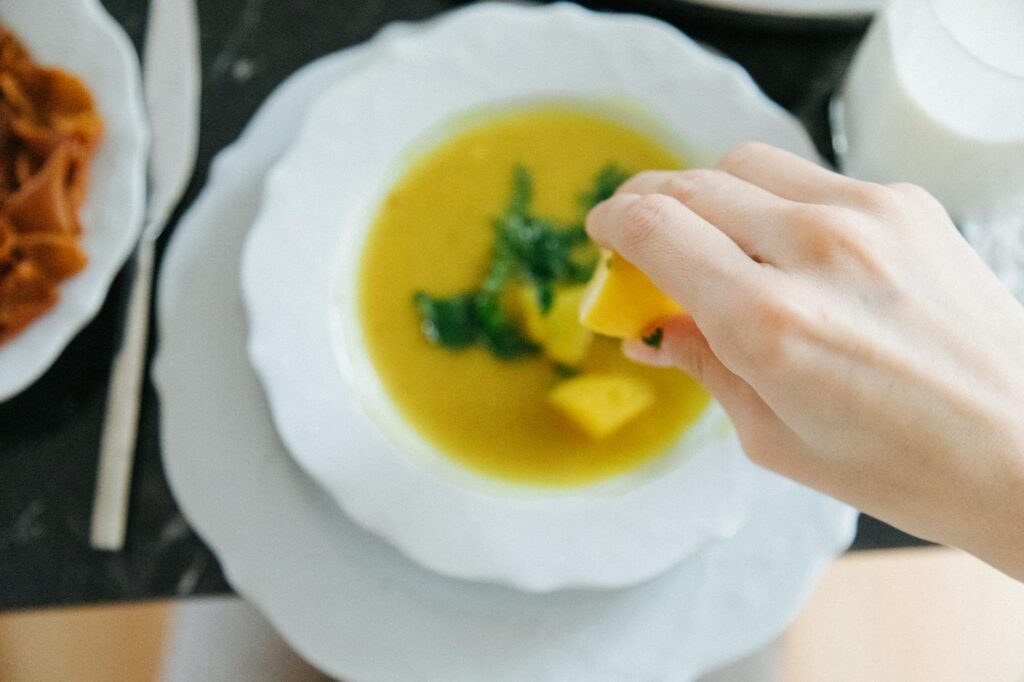
Rule 4: Use brightness at the end. Lemon juice, lime juice, vinegar, fresh chopped herbs and scallions, citrus zest, and pickled onions all provide a different benefit than salt. They don’t add saltiness to the dish, but give it more life. Add at the end of cooking or at the table so the bright flavour stays separate. That’s why lime juice can bring black beans back to life quicker than another spoonful of cumin.
Rule 5 – Separate heat from depth – Heat can represent chili powder or pepper, mustard, horseradish, or ginger; depth can be represented by tomato paste, mushrooms, miso, browned onion, soy sauce or nutritional yeast. A lot of cayenne in a dish does not keep it at a shallow level. When you have curry/chili that has heat but is also very boring, it can usually use more of a savory base or acidic products (not more chili).
Rule #6: End with a different texture. Vegan food heavily utilizes tender textures; when grains, legumes and cooked veggies are used. A crunchy topper or a bright garnish will elevate the same bowl of food and make it feel more satisfying than if nothing was added. Consider lightly toasted breadcrumbs, crushed toasted peanuts, pumpkin seeds, chopped fresh herbs, raw cabbage, thinly sliced radish or chili crisp as possible toppings.
A realistic example with numbers
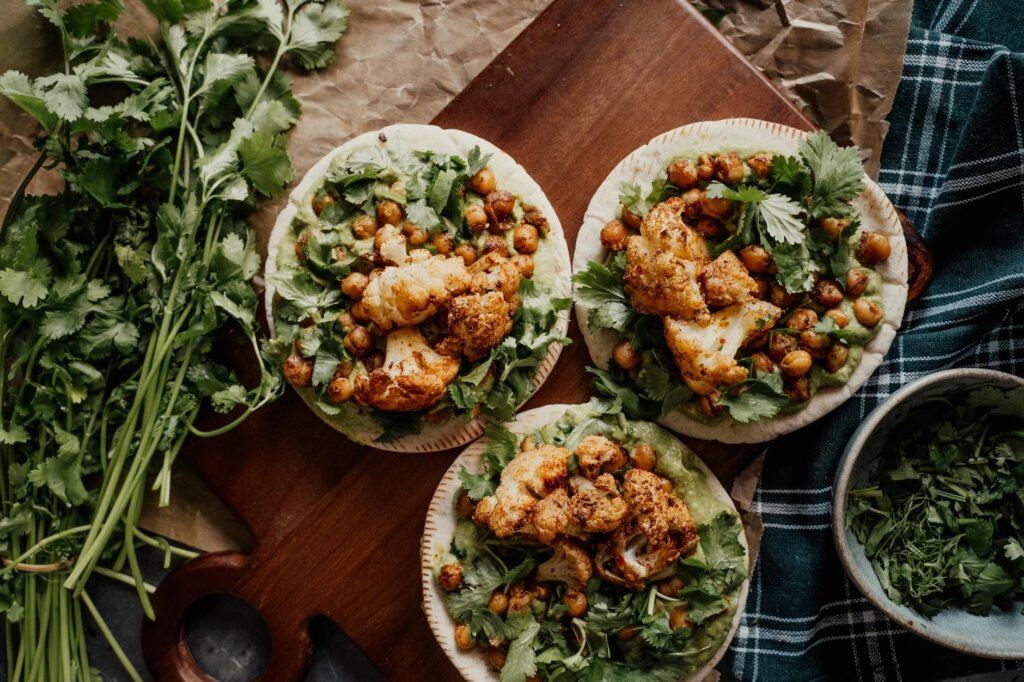
Consider a six-serving black bean and rice bowl for a weeknight household. Composite supermarket prices: 1 pound dry black beans, $1.79; 2 cups rice, $1.20; one 14-ounce block of tofu, $2.29; half a cabbage, $1.25; 1 onion, $0.90; tomato paste for the batch, $0.30; soy sauce or tamari, $0.20; one lime, $0.50; pumpkin seeds, $0.85; and spices plus oil, roughly $1.20. Total: about $10.48, or roughly $1.75 per serving. Cooked plainly, that meal can taste like starch with cumin. Built with the 5-Lane check, it tastes deliberate: salt from soy sauce and salt, savory depth from tomato paste, aroma from bloomed cumin and garlic, brightness from lime and quick-pickled cabbage, and texture from toasted pumpkin seeds. The ingredient cost barely changes, but the meal feels less repetitive, which is exactly what keeps cheap staples from turning into takeout temptation.
A decision table for bland vegan dishes
| If it tastes like this | What is probably missing | Cheapest first fix | Usually better than adding more of |
|---|---|---|---|
| Salty but still flat | Acid or aroma | Lemon juice, vinegar, herbs, zest | More salt |
| Spicy but dull | Savory depth | Tomato paste, miso, mushroom powder, nutritional yeast | More cayenne |
| Earthy and muddy | Brightness | Citrus, pickle brine, chopped herbs | More cumin or smoked paprika |
| Watery and weak | Concentration or texture | Reduce uncovered, roast harder, add a toasted topper | More liquid seasoning |
| Heavy or rich | Freshness | Scallions, cilantro, parsley, radish, lime | Extra oil |
| Healthy but boring | A missing lane overall | Add either savory plus acid or acid plus crunch | A random spice mix |
How to rescue a bland pot without turning it muddy
- Spoon 1/2 cup of the dish into three small bowls before you touch the full pot.
- Bowl A: add a tiny salt move, such as a pinch of salt or a few drops of soy sauce.
- Bowl B: add a bright move, such as 1/2 teaspoon lemon juice or vinegar.
- Bowl C: add a savory move, such as a small dab of tomato paste, miso, nutritional yeast, or a pinch of MSG.
- Taste all three, then combine the two winning moves in a fourth sample.
- Scale the fix back into the full pot only after the sample clearly tastes better.
When seasoning is not the real problem
- The vegetables released too much water. Reduce the pan longer or roast at higher heat; diluted flavor cannot be solved by paprika alone.
- The tofu or mushrooms never browned. Deep browning creates flavor concentration that seasoning can build on.
- The beans are undercooked. Hard-centered beans taste flat and chalky no matter how good the sauce is.
- Everything is the same texture. Add a raw or toasted element before you buy more sauces.
- The spices are stale. Replace the jar you have had for years before buying three new trendy blends.
- The dish needs a side condiment. Salsa verde, chili oil, pickled onions, or lemon wedges let each eater adjust brightness at the table.
Common mistakes that waste money and still taste bland
- Buying three bottled vegan sauces instead of keeping a simple toolkit: one acid, one chili, one savory concentrate, and one herb blend.
- Using garlic salt and onion salt as if they were spices. They season, but they can crowd sodium quickly, which is why label checks matter. (fda.gov)
- Adding every savory ingredient in the pantry and creating muddiness instead of depth.
- Skipping fresh elements because the cooked food already has flavor.
- Forgetting texture, especially in bowls built from beans, grains, and roasted vegetables.
- Trying to fix a watery soup with more powder instead of reducing it.
- Salting only at the table and never adjusting the pot itself.
- Marinating tofu, then crowding the pan so it steams instead of browning.
How to verify that the advice is working in your kitchen
On purpose perform one side-by-side test with cooking; remember this for your next time you are making lentils, tofu, chickpeas and/or roasted vegetables. Prepare one portion as is, then prepare a second portion by replacing any of the empty lines (missing ingredients) that you previously identified when preparing each side of your meal. If the side of the meal that is made with the empty ingredient slots on the plate tastes more better than the side that has not 5m later and the taste holds up as leftovers, you have made a system that works well in your kitchen. If the side of the meal made with the empty ingredient slots only tastes better at the time of serving and eating (the meal is still hot), you may be too reliant on chili heat and too little on savory depth, acid, or aroma while preparing meals.
- Can you name the dish’s savory anchor in one sentence?
- Is there at least one bright element added late?
- Is there something aromatic or fresh on top?
- Is there a texture contrast?
- If you removed the garnish, would the base still taste seasoned?
Bottom line
When vegan dishes stop relying on a single ingredient to perform all roles, their bold flavours are revealed. Salt is not brightness; heat does not provide depth; and nutritional yeast is not an entire flavour experience in itself. To create a fuller flavour for your food, be certain to utilise the 5-Lane Flavour Test by creating one savoury anchor, adding acid after flavouring with herbs/spices, and finishing with either aroma or texture/crunch. This method will give your pantry-based meals more intent while benefiting you in terms of dinnertime and your grocery budget; you’ll be much less likely to abandon a pot of beans in favour of take-out.
FAQ
Do vegan meals need more salt than meat-based meals?
Not necessarily. They usually need better balance. Start by checking for missing savory depth, acid, aroma, or texture before salting again. If sodium matters in your household, FDA says the Daily Value for sodium is less than 2,300 milligrams, and MyPlate recommends comparing labels and using herbs and spices instead of leaning only on salty products. (fda.gov)
What is the cheapest flavor upgrade for beans and lentils?
Often, using just one of each seasoning, a savoury concentrate and an acidic component can go farther than buying a new bottled sauce. Examples include using vinegar and tomato paste, or miso and green onions. If your dish still seems too soft, try using toasted seeds or raw cabbage before spending more money.
Is nutritional yeast enough to make a dish taste bold by itself?
Usually no. Nutritional yeast can add savory, nutty depth, but it rarely solves brightness, aroma, and texture on its own. It works best as one lane in the system, not the entire system.
Can I use MSG in vegan cooking?
Yes, if you want a direct savory boost. FDA says added MSG is generally recognized as safe, and NIDCD identifies glutamate salts as a source of umami, the savory taste. It still contributes sodium, so use it as one tool rather than a blank check. (fda.gov)
Why does tofu still taste bland after marinating?
The tofu did not always brown properly due to either an overcooked pan (as there were too many items in it) or because of the marinate used – no acid and/or aroma. By adding a more profound and complex flavour to your tofu, you create a level of flavour that will make your finished dish/recipe look brighter and fresher in the end.
Do I need a huge spice collection to cook good vegan food?
No. A tight starter set is usually better: one acid, one chili source, one savory concentrate, one all-purpose herb or spice blend, garlic, and black pepper. If your sense of smell is reduced by a cold or congestion, food may also taste flatter than usual because smell is a major part of flavor perception. (nidcd.nih.gov)
References
- USDA Food Plans: Monthly Cost of Food Reports – https://www.fns.usda.gov/research/cnpp/usda-food-plans/cost-food-monthly-reports
- MyPlate: Beans, Peas, and Lentils – https://www.myplate.gov/beans-and-peas
- FDA: Sodium in Your Diet – https://www.fda.gov/food/nutrition-education-resources-materials/sodium-your-diet
- NIDCD: Umami – https://www.nidcd.nih.gov/glossary/umami
- NIDCD: Taste Disorders – https://www.nidcd.nih.gov/health/taste-disorders
- FDA: Questions and Answers on Monosodium glutamate (MSG) – https://www.fda.gov/food/food-additives-petitions/questions-and-answers-monosodium-glutamate-msg
- MyPlate: More Key Topics: Oils, Added Sugars, Saturated Fats, Sodium, and Alcohol – https://www.myplate.gov/web/eat-healthy/more-key-topics
- MyPlate: Eating Smart Seasoning Mix – https://www.myplate.gov/recipes/eating-smart-seasoning-mix