TL;DR
- Rich vegan soup usually comes from solids, starch, and depth, not from a carton of cream substitute.
- The cheapest body builders are often the right ones: beans, onions, carrots, potatoes or sweet potatoes, squash, rice, oats, or stale bread.
- Use the BODY Score before you buy anything special: Base, Onion, Deepener, Yield.
- Using USDA ERS 2023 cup-equivalent costs, an 8-serving sweet potato and pinto soup base built from sweet potatoes, onions, baby carrots, and dried pinto beans comes to about $3.02 total, or roughly $0.38 per bowl before pantry seasonings and water. (ers.usda.gov)
- For leftovers, refrigerate soup within 2 hours in shallow containers; use it within 3 to 4 days or freeze it for longer storage. (foodsafety.gov)
Thin vegan soup usually is not missing a fake dairy product. It is missing structure. For most home cooks, the real frustration is not dietary purity; it is ending up with a pot that tastes watery, reheats poorly, and costs more than it should because the fix was a specialty substitute instead of a real soup ingredient. USDA ERS price data helps explain why the smarter path is often the cheaper one: in 2023, dried pinto beans were listed at $0.23 per cup equivalent, onions at $0.42, baby carrots at $0.40, and sweet potatoes at $0.58. Those are exactly the kinds of ingredients that give soup weight and staying power. (ers.usda.gov)
Why rich soup is not the same thing as creamy soup
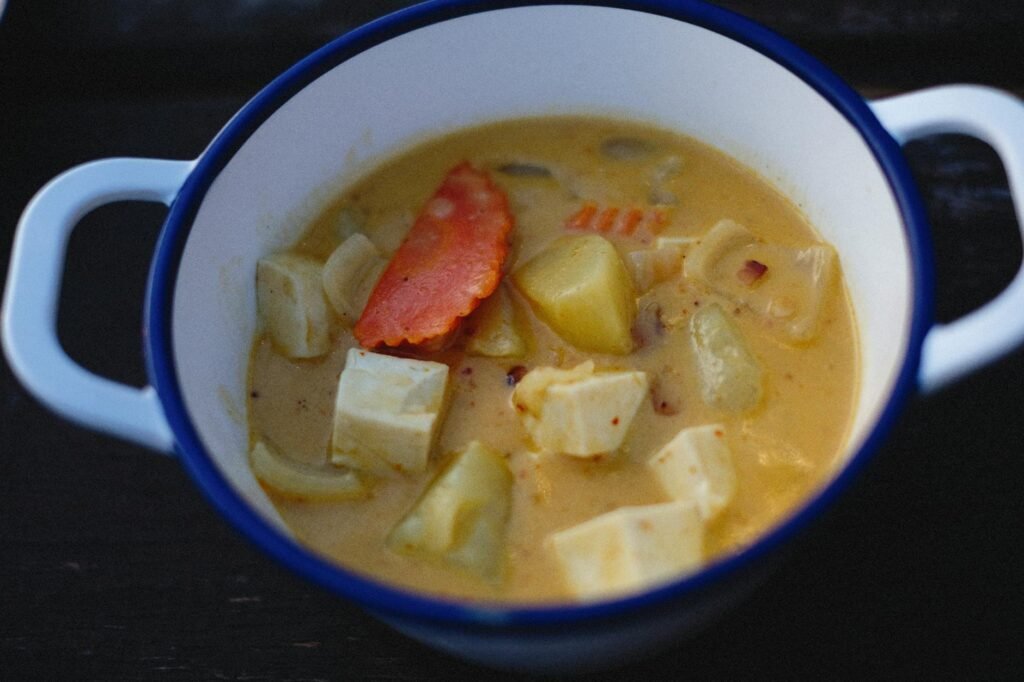
Rich soups perform four functions simultaneously. They have a light body and contain the right amount of softened solids for balance; they contain sufficient starch or pureed vegetables that are suspended throughout the soup to emulsify it within the broth; they have enough cooked aromatics to add depth rather than sharpness to the flavour; and, at the end of the soup preparation process, there would be some fat (or oil) that would carry flavour on the palate. While cream can provide some of these functions, other ingredients such as potatoes, beans, lentils, squash, onions, rice, oats, or even a piece of stale bread may also provide similar functions in making a rich soup. Ultimately, the purpose is not to replicate the properties of heavy cream but rather build body intentionally through layers of ingredients.
That distinction matters for your grocery budget because the best body builders are often regular pantry foods, not one-use vegan substitutes. It also matters for meal planning. MyPlate notes that beans, peas, and lentils fit in both the Vegetable and Protein Foods groups, which is one reason a bean-thickened soup can work as dinner rather than just a starter. When one ingredient adds body and substance at the same time, the pot becomes easier to stretch across multiple meals. (myplate.gov)
Use the BODY Score before you add anything expensive
- Does your base contain at least one authentic body item ( potato or sweet potato, beans, lentils, split peas, squash, rice, oats or bread)? If there are no actual body items then your broth is predominately water.
- O = Onion foundation. Did the onion, leek, shallot, or garlic get enough time? Rich soups almost always start with aromatics cooked until soft, sweet, and slightly golden, not just warmed through.
- D = Deepener. Is there a savory backbone such as mushrooms, tomato paste, roasted garlic, or miso? Thickness without depth tastes flat.
- Y = Yield control. Did the liquid just cover the solids, or did the pot get flooded? Most thin soups are not under-seasoned first. They are over-diluted first.
- Score it honestly. A 0 to 3 usually means the soup requires some structural help. A 4 to 6 means it probably just needs one fix, definitely not five. A 7 or 8 means the finish should probably be small: a drizzle of olive oil, a squeeze of lemon, or both.
If the BODY Score is low, do not reach for more salt yet. Fix the body first, then taste again. Many soups taste bland simply because the flavorful parts are too diluted.
What to use instead of cream
| If you want… | Use this | Why it works | Best for | Watch for |
|---|---|---|---|---|
| Neutral thickness | White potato or stale bread | Soft starch blends in without changing the soup’s identity too much | Tomato soup, leek soup, cauliflower soup, mushroom soup | Overblended potatoes can turn pasty |
| Silk plus staying power | White beans, pinto beans, lentils, or split peas | Adds body and enough substance to make the bowl feel like dinner | Tomato soups, greens, minestrone-style soups, squash soups | Cook fully before blending or the texture can taste chalky |
| Velvet with mild sweetness | Sweet potato, carrots, or winter squash | Adds solids and a rounded finish | Red lentil soups, curry-spiced soups, roasted vegetable soups | Can push delicate soups too sweet |
| A glossy finish | Olive oil, tahini, or blended sunflower seeds | A small amount of fat added at the end makes pureed soups feel fuller | Broccoli soup, bean soup, roasted vegetable soup | Too much makes the soup heavy rather than rich |
| Deeper savoriness | Mushrooms, tomato paste, roasted garlic, or miso | Richness needs depth, not just thickness | Brothy vegetable soups and bean soups | Add gradually so one note does not dominate |
A realistic batch that stays rich and cheap
Here is a budget-minded example that works in a real household. For an 8-serving sweet potato and pinto soup, use 3 cup equivalents of sweet potatoes, 1 cup equivalent of onions, 1 cup equivalent of baby carrots, and 2 cup equivalents of dried pinto beans as the texture backbone. Using USDA ERS 2023 cup-equivalent figures, that produce-and-bean base totals about $3.02, or roughly $0.38 per bowl before pantry seasonings and water. That is the core secret of rich vegan soup on a budget: the ingredients doing the thickening are also the ingredients stretching the meal. (ers.usda.gov)
Picture a family of four eating four bowls for dinner and packing four bowls for next-day lunches. That is one pot covering two meal events without requiring a specialty dairy-free product. If you batch-cook beans, the economics may improve further. Oregon State Extension says 2 cups of dried beans yield about 6 cups cooked, and a 15-ounce can holds about 1 3/4 cups beans. That gives you room to thicken tonight’s soup, hold back some beans for tacos or salad tomorrow, and freeze the rest for another soup later in the month. (extension.oregonstate.edu)
Prices vary by region, store, and package size. USDA ERS figures are national reference points for comparison and planning, not a promise of what you will pay at one specific supermarket this week. (ers.usda.gov)
Technique matters more than the ingredient list
- Start with aromatics and give them time. Cook onion, leek, celery, or shallot in oil over medium-low heat until fully soft. If the onions still taste raw, the finished soup will too.
- Add your body builder early. Potatoes, sweet potatoes, carrots, beans, lentils, and squash need time to soften enough to blend smoothly.
- Use less liquid than feels comfortable at first. The broth should barely cover the solids. It is much easier to thin a soup later than to rebuild a watery one.
- Cook until the thickening ingredient can be crushed easily against the side of the pot. If a bean or potato resists a spoon, it is not ready to create a silky texture.
- Blend in stages. Puree one or two cups first, stir, and check the texture before blending the whole pot. Partial blending often gives the best balance between body and character.
- Finish after the texture is right. Then add lemon, vinegar, black pepper, herbs, or a small drizzle of olive oil. If you season early and reduce later, the soup can turn overly salty.
- Let the soup rest for 10 minutes before the final taste. Many soups thicken slightly off the heat, which gives you a more honest read on whether the body is actually there.
Common mistakes that keep dairy-free soup from tasting rich
- Adding too much broth at the beginning. This is the most common problem, and it is more expensive to fix than to prevent.
- Using only watery vegetables like zucchini, celery, or mushrooms without a starch or legume to anchor them.
- Trying to get richness from oil alone. A thin base plus extra oil gives you greasy soup, not luxurious soup.
- Undercooking beans or lentils before blending. The flavor can read dusty and the texture grainy.
- Skipping the long onion stage. If the aromatics are not sweet and soft, the soup rarely tastes finished.
- Adding more salt when the real problem is weak structure. Salt cannot replace body.
- Pureeing every soup completely. Some soups taste richer when only part of the pot is blended and the rest stays chunky.
When the first fix still is not enough
Occasionally, there is excess soup on the thick side but lacking due to the absence of high caliber stock. Attempt to incorporate additional flavors such as tomato paste, sautéed mushrooms, roasted garlic or miso in order to add richness without increasing the fat content or volume.
When broth has been added to soup and is “silky” it can be too sweet; therefore, use a sour product (such as lemon) or add black pepper, or a bitter green, to restore balance.
When you win the winner award for soup that feels “hearty” yet appears to have too much liquid; when it is time to finish your dinner but you still have 15 minutes to go and are currently left with nothing but “broth” to use to complete your meal, look for one or more of the following three ingredients in your house. All are cost effective, and inexpensive to use: use of cooked beans, leftover rice or rolled oats that were previously cooked, add these in small amounts at a time so your soup remains true to its base stock.
Two limits matter. First, Oregon State Extension says dried red kidney beans should be boiled on the stovetop for at least 10 minutes before slow-cooking. Second, thickened or creamed soups are not good candidates for home canning. University of Minnesota and Penn State Extension both advise against canning soups with cream, flour, rice, pasta, or similar thickeners; freezing is the safer backup for those versions. (extension.oregonstate.edu)
How to verify the advice in your own kitchen
- Do a spoon test. If the soup runs off the spoon like plain broth, it still needs more body.
- Run a side-by-side test. Blend one mug of soup completely and compare it with the unblended pot before you decide to puree everything.
- Try a cold-bowl check. Chill a few spoonfuls for 10 minutes. If the soup turns pasty when cold, you overdid the starch. If it still tastes thin, the fix is not finished.
- Audit the cost per bowl. Divide the ingredients doing the thickening by the number of servings, not by the pot. That shows whether the soup is really pulling its weight as a meal.
- Test the next-day version. Truly rich soups often hold up well overnight, which is what matters if you meal prep.
- Store it safely so the test is fair. Divide leftovers into shallow containers, refrigerate within 2 hours, keep them 3 to 4 days in the fridge, or freeze for longer storage. (foodsafety.gov)
The bottom line
The secret to rich vegan soup is not a secret ingredient. It is a build order: cook the aromatics properly, choose one real body builder, control the liquid, blend strategically, and finish with a little fat and acid instead of trying to buy richness in a carton. That method is good cooking, but it is also good household math, because the same ingredients that improve texture, like dried beans, onions, carrots, and sweet potatoes, are among the lower-cost items in USDA ERS’s recent price data. (ers.usda.gov)
FAQ
Can I make a rich vegan soup without nuts or coconut milk?
Indeed, you can create a diet that works for you and builds muscle through foods other than nuts, coconut milk, and imitation dairy products, including potatoes, beans, lentils, split peas, rice, oats, squash, and stale bread. The texture of these foods is created primarily through their starches or the softening effect of cooking them rather than by the addition of fats.
Are dried beans really worth using for soup?
If time allows, usually yes. Oregon State Extension says 2 cups of dried beans yield about 6 cups cooked, which makes dried beans practical for one soup now and extra portions later. Canned beans still work, but dried beans give you more flexibility for batch cooking. (extension.oregonstate.edu)
What is the cheapest ingredient that adds real body?
In USDA ERS’s 2023 data, dried pinto beans were listed at $0.23 per cup equivalent and onions at $0.42. Those are hard to beat because they add both flavor and structure. Sweet potatoes at $0.58 and baby carrots at $0.40 can also do a lot of work in one pot. (ers.usda.gov)
Why does my blended bean soup taste chalky instead of silky?
The beans or lentils may have been blended when they were not cooked long enough to soften, or you may want to add an acid or depth to your dish after blending. Cook on low heat until the legumes are soft and will crush easily against the pot or until you are happy with the flavour.
How long does homemade soup last in the fridge?
USDA food safety guidance says leftovers should be refrigerated within 2 hours, ideally in shallow containers for quick cooling. Soup keeps 3 to 4 days in the refrigerator and 3 to 4 months in the freezer for best quality. (foodsafety.gov)
Can I can these soups for pantry storage?
Not the thickened versions. University of Minnesota and Penn State Extension both caution against home-canning soups that include cream, flour, rice, pasta, or similar thickeners. For those soups, freezing is the safer backup. (extension.umn.edu)
References
- USDA ERS Fruit and Vegetable Prices – Highlights and Interactive Charts – https://www.ers.usda.gov/index.php/data-products/fruit-and-vegetable-prices/highlights-and-interactive-charts
- USDA ERS Fruit and Vegetable Prices – https://www.ers.usda.gov/index.php/data-products/fruit-and-vegetable-prices
- MyPlate – Beans, Peas, and Lentils – https://www.myplate.gov/beans-and-peas
- Oregon State University Extension – Slow Cooker Beans – https://extension.oregonstate.edu/imported-publication/slow-cooker-beans
- USDA FSIS – Leftovers and Food Safety – https://www.fsis.usda.gov/food-safety/safe-food-handling-and-preparation/food-safety-basics/leftovers-and-food-safety
- FoodSafety.gov – 4 Steps to Food Safety – https://www.foodsafety.gov/keep/basics/clean/index.html
- University of Minnesota Extension – Preserving soup – https://extension.umn.edu/preserving-and-preparing/preserving-soup
- Penn State Extension – Preserving Soup Safely – https://extension.psu.edu/preserving-soup-safely/