
TL;DR
- Use convenience foods as meal helpers, not the whole plan. A good shortcut should save time and still make it easier to eat vegetables, fruit, beans, grains, or soy foods.
- Let the Nutrition Facts label do the arguing. The FDA says 5% Daily Value or less is low and 20% or more is high; in general, look for more fiber and less sodium, saturated fat, and added sugars. (fda.gov)
- Keep frozen and canned produce in the rotation. MedlinePlus says they can still be good choices, and for canned vegetables it recommends looking for options without added salt. (medlineplus.gov)
- Do not assume all plant milks are nutritionally interchangeable. The FDA says fortified soy beverages are the only plant-based alternatives included in the dairy group in federal dietary guidance. (fda.gov)
- If you eat vegan, make sure you have a reliable vitamin B12 source. NIH says plant foods do not contain B12 unless they are fortified, and vegans may not get enough from diet alone. (ods.od.nih.gov)
The actual challenge of vegan convenience food is not about purity but about “Friction”. A busy Tuesday does not typically include the comparison between homemade lentil stew and junk food; instead it is the comparison of waiting 10 minutes versus getting takeout, or from having to use a frozen meal versus a bunch of produce that will probably spoil before you ever have the chance to use it. Therefore, the best thing we can do is to not eliminate convenience foods, but rather find a place for them.
The current Dietary Guidelines for Americans prioritize whole, nutritious foods and limit highly processed foods, added sugars, and refined carbohydrates, while the FDA’s updated “healthy” package standard also focuses on foods that contribute meaningful food groups without too much sodium, saturated fat, or added sugars. In practice, that means keeping the shortcuts that help you eat more plants and cutting the ones that mostly sell speed, salt, and markup. (fns.usda.gov)
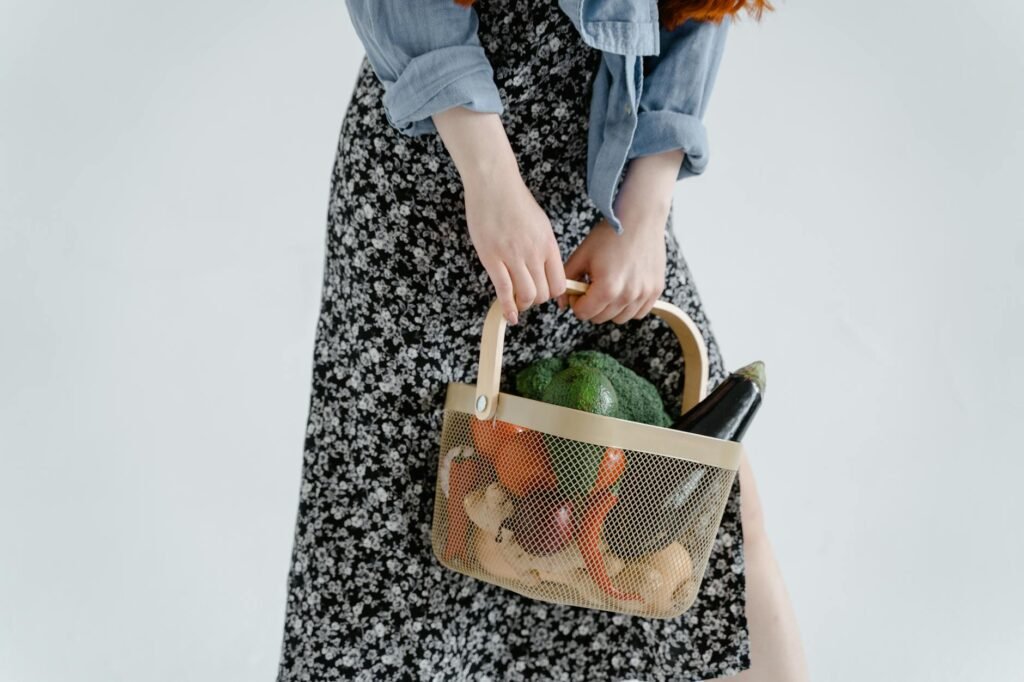
Convenience food is a tool, not a moral failure
Packaged food is not automatically the problem. The more useful question is whether it helps you build a meal that still resembles food, not just a branded snack. The American Heart Association notes that more than 70% of the sodium Americans eat comes from packaged, prepared, and restaurant foods. That is a good reason to read labels closely, not a reason to pretend every boxed or frozen item is off-limits. MyPlate’s basic visual still works here: make about half the plate fruits and vegetables, and use protein foods such as beans, peas, lentils, nuts, seeds, tofu, and tempeh to make the meal satisfying. (heart.org)
Cooking (or reheating) food in bulk prepares healthy meals ahead of time. Having frozen burritos, fruit, and a bowl of steamed broccoli ready for quick dinners is a great convenience. Standard bagged salad kits topped with chickpeas and croutons can be full lunches. Even though it’s called a protein snack, many are simply dessert – like the cookie sold as a vegan protein bar – but do contain protein; it’s just a matter of finding a different context for the protein.
A common way to categorize food has been to classify them as either ‘good’ or ‘bad’. Instead, categorizing food as a foundation, a supplement or helper, or a treat or fun food could be a better way to view the way you’ll use each food type.
Use the Fresh-Help-Junk Scorecard
Here is a quick screen for any vegan convenience item in your cart. Give it 1 point for each box it checks. A score of 5 or 6 means buy it often. A 3 or 4 means rotate it in. A 0 to 2 means keep it as an occasional extra, not a weekly staple. The label math comes from the FDA’s Daily Value guide: 5% DV or less is low, and 20% DV or more is high. For sodium, the American Heart Association recommends no more than 2,300 milligrams a day for most adults, so a single item at 20% DV or more deserves a closer look. (fda.gov)
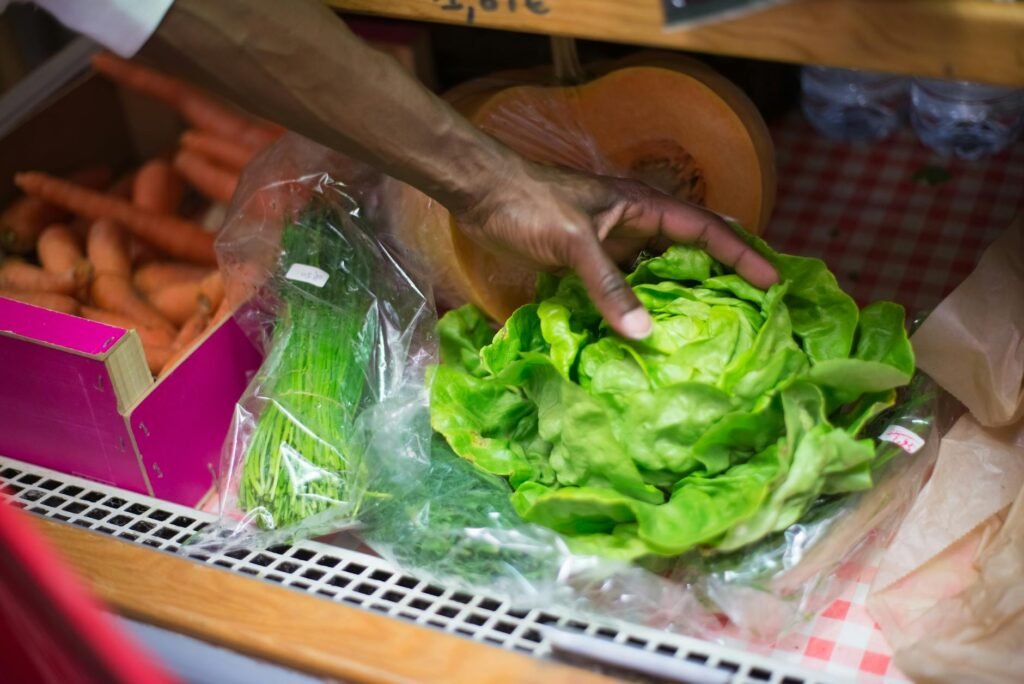
- Protein point: It gives you at least 10 grams of protein per serving, or its main ingredient is beans, lentils, soy, or another substantial plant protein.
- Fiber point: It gives you at least 10% DV of fiber, or roughly 3 grams or more per serving. The FDA encourages choosing foods higher in fiber. (fda.gov)
- Sodium point: It stays at 20% DV or less for sodium per serving, or you already know the rest of the meal will be very low in sodium. (fda.gov)
- Sugar and saturated fat point: It is not high in added sugars or saturated fat unless it is a small condiment or dessert item. The FDA recommends choosing foods lower in saturated fat and added sugars. (fda.gov)
- Meal-role point: It helps build a meal, like veggie burgers, marinated tofu, canned soup, frozen edamame, or microwavable grains, instead of just replacing one snack with another.
- Cost: This price per serving is fair for the amount of work you save. Generally, if a product costs more than double what it would cost to produce it yourself easily at home, it should provide added value for either being more convenient, having a longer shelf life, or reducing excess waste.
| Item | Green light when | Watch-outs | Best pairing to make it feel fresher |
|---|---|---|---|
| Frozen veggie burgers | Good protein, reasonable sodium, not your only protein all week | High sodium, tiny serving size | Add tomato, slaw, fruit, or roasted vegetables |
| Canned lentil or bean soup | Decent protein and fiber, especially for desk lunches | Many soups are sodium-heavy | Pair with whole grain toast and a side salad or frozen vegetables |
| Bagged salad kits | They prevent takeout or produce waste | Dressings and toppings can add lots of sodium and sugar | Stretch with chickpeas, tofu, edamame, or leftover grains |
| Microwavable rice or grain pouches | They replace a delivery order or a skipped meal | Higher cost per serving than dry grains | Use as a base for beans, tofu, salsa, and vegetables |
| Marinated tofu or tempeh | You will actually use it because the prep work is done | Some marinades are high in sodium or added sugar | Serve with cucumbers, greens, brown rice, or roasted vegetables |
| Vegan mac, ramen, or frozen pasta | Emergency meal only, not the backbone of the week | Often high in sodium and low in protein or fiber | Bulk it up with peas, spinach, broccoli, and baked tofu |
Build meals around anchors, not perfection
If you want fresher plant-based meals without turning dinner into a project, anchor every week with three categories: produce, proteins, and emergency helpers. Produce can be fresh, frozen, or canned. Protein can be beans, lentils, tofu, tempeh, edamame, nut butter, or another soy food. Helpers are the items that save your weekday self: jarred sauce, soup, veggie burgers, microwavable grains, bagged slaw, or pre-cut vegetables. MyPlate also treats beans, peas, and lentils as unique foods that can count toward either vegetables or protein, which is one reason they are so useful in a budget-minded vegan routine. (medlineplus.gov)
- A practical shopping split for many households is about 50% produce and fruit, 30% proteins and basic starches, and 20% convenience helpers and fun foods.
- If your cart flips that ratio, with most of the money going to faux meats, frozen entrées, bars, and desserts, your budget usually gets tighter before your meals get better.
- Use fresh items for texture and flavor, and frozen or canned items for insurance. That is how you eat fresher food without gambling on your schedule.
A realistic weekly example with numbers
Consider a single adult trying to cover five workday lunches and five easy dinners. An all-convenience cart might look like this: two frozen vegan pizzas for $14, two bags of nuggets for $12, five breakfast sandwiches for $21, four bars for $8, and two salad kits for $9. That is $64 before fruit, milk, bread, or basics, and it still leaves you piecing meals together.
A more balanced cart might be two emergency frozen meals for $11.50, two blocks of tofu for $5, four cans of beans for $5, brown rice for $3.50, pasta plus sauce for $4, frozen vegetables for $4.50, fresh produce for $15, hummus for $3.50, veggie burgers for $5, and fortified soy milk for about $3.75. That lands around $60.25 and makes bowls, pasta, wraps, salads, burgers, and backup freezer meals possible.
The goal is not to buy zero convenience foods. It is to spend convenience money on items that create multiple meals instead of one isolated craving. Fortified soy milk is a smart default in this setup because the FDA says it is the only plant-based milk alternative included in the dairy group in federal guidance. (fda.gov)
The 30-minute weekly reset
- Pick two fresh produce anchors you genuinely like and will use in three days, such as salad greens and cucumbers, or peppers and berries. Do not buy an aspirational cart.
- Pick two longer-life produce backups, such as frozen broccoli and bananas, or canned tomatoes and apples.
- Pick two protein anchors, usually one bean or lentil option and one soy option. This keeps meals from turning into starch plus sauce.
- Choose two convenience helpers: for example, bagged slaw, a microwavable grain pouch, canned soup, marinated tofu, or veggie burgers.
- Prep one base, not five. Cook a pot of rice, wash greens, roast a sheet pan of vegetables, or portion hummus and fruit for grab-and-go meals.
- Hold one true emergency meal in reserve. If you eat it on Wednesday, replace it on the next grocery trip instead of pretending next week will be calmer.
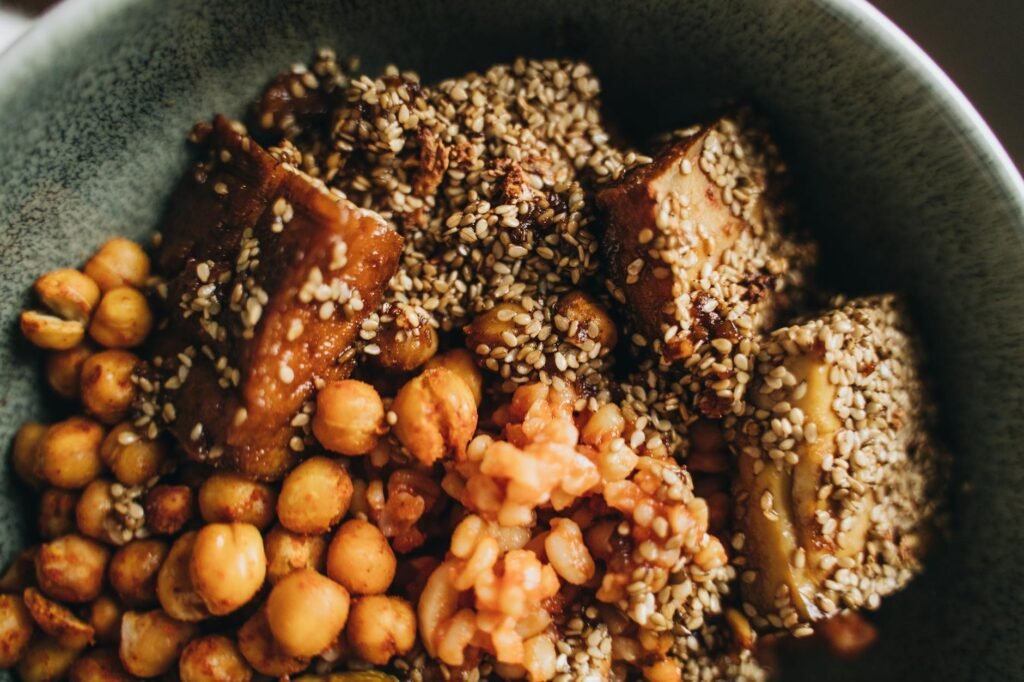
Common mistakes that make the week more expensive
- Buying convenience foods that still require twenty minutes of chopping, sauce-making, or cleanup. A shortcut should remove friction, not relocate it.
- Letting faux meats crowd out beans, lentils, tofu, grains, fruit, and vegetables. Novelty proteins are usually the highest-cost part of the cart.
- Ignoring serving sizes. The American Heart Association notes that if your portion is two servings, you are eating twice the sodium listed on the label. (heart.org)
- Treating all plant milks as nutritionally equal. The FDA says nutrient content varies widely, and fortified soy beverages are the only plant-based alternatives included in the dairy group. (fda.gov)
- Forgetting vitamin B12 because the overall diet feels clean. NIH says plant foods do not contain B12 unless fortified, so vegans need a reliable fortified food or supplement source. (ods.od.nih.gov)
- Using protein as the only filter. The FDA label also shows fiber, sodium, saturated fat, added sugars, calcium, iron, potassium, and vitamin D, which gives a fuller picture. (fda.gov)
When the fresh plan falls apart
Some weeks are not fixable with better intentions. Work runs late. Kids get sick. Executive function disappears. Travel, caregiving, depression, and low energy can make “just cook more” useless advice. This is where backup options matter. MedlinePlus says frozen and canned vegetables can still be good choices, and it specifically recommends looking for canned vegetables without added salt. That means a freezer-and-pantry vegan plan is not a failure plan. It is a resilience plan. (medlineplus.gov)
- Keep one or two frozen vegetable blends you actually enjoy.
- Stock canned beans, lentils, or chili for instant protein.
- Use microwavable grains when dry grains keep sitting in the pantry unopened.
- Buy at least one no-cook produce item every week, such as apples, grapes, baby carrots, or snap peas.
- Keep one fortified breakfast cereal or nutritional yeast product if it helps you cover B12 more consistently. NIH says fortified foods can help when food alone is not enough. (ods.od.nih.gov)
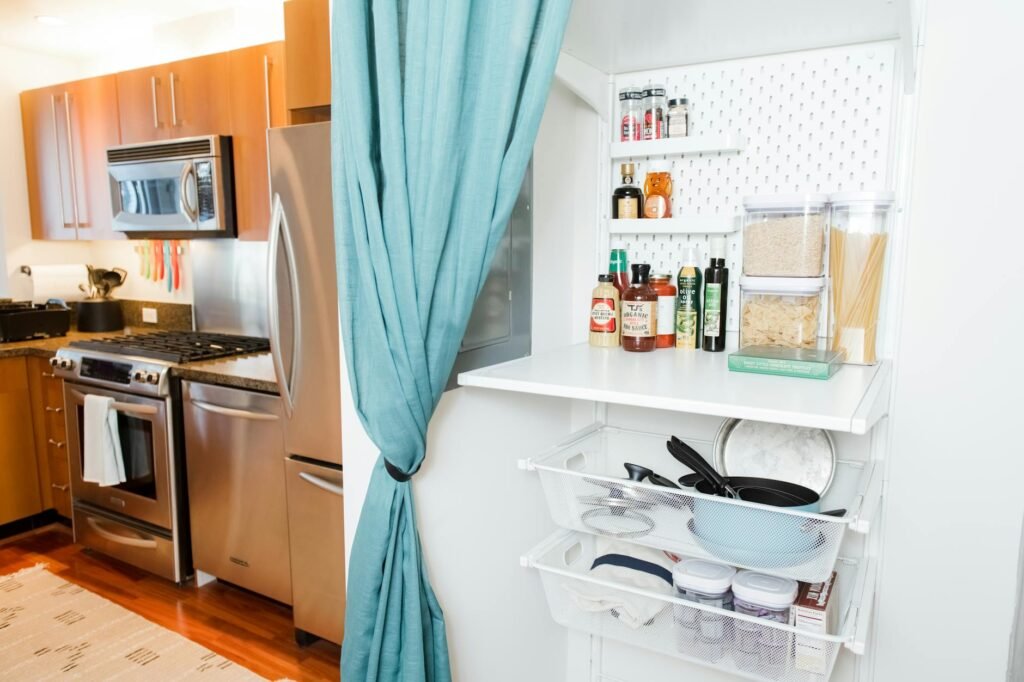
How to pressure-test whether your mix is working
Run a seven-day audit once, then adjust. Do not judge the plan by how healthy it sounds. Judge it by cost, waste, energy, and what you actually ate. The Nutrition Facts label gives you the hard data for sodium, saturated fat, fiber, protein, added sugars, vitamin D, calcium, iron, and potassium. Vegan eaters should also confirm a regular B12 source, and people with a history of low iron, heavy periods, pregnancy, or digestive issues may need closer follow-up because NIH notes that iron needs differ for mostly plant-based eaters and plant iron is absorbed less efficiently. (fda.gov)
- Write down total grocery spend for the week and circle anything you threw away. Waste is a money problem, not just a meal-prep problem.
- Count how many lunches and dinners included at least one produce item and one meaningful protein source.
- Check your convenience foods for sodium and fiber using %DV. If several meals are 20% DV sodium or higher and low in fiber, swap one or two staples next week. (fda.gov)
- Verify your B12 routine. If you are relying on plant milks, cereals, or nutritional yeast, read the label. If you are using a supplement, check the Supplement Facts panel. (ods.od.nih.gov)
- If you feel unusually tired, lightheaded, or short of breath, or you have heavy periods, talk with a clinician rather than self-diagnosing your iron status from social media. NIH’s consumer iron guidance specifically notes higher needs for people eating mostly plant-based diets. (ods.od.nih.gov)
Bottom line
The top-rated vegan convenience foods will likely not have the cleanest marketing representation. They will save you time, provide budget protection, and help make it easier for you to eat vegetables, fruits, beans, grains, and soy foods most days. Don’t give packaged foods a pass – simply give them a role. If a shortcut to making a fresher meal is working for you then stick with it, but if the shortcut takes little amounts of cheaper basic foods and replaces them with more sodium and less fiber, along with a higher grocery bill, then downgrade the shortcut.
FAQ
Are vegan meat substitutes bad for you?
Not automatically. The FDA’s updated “healthy” package standard focuses on whether a food contributes useful food groups and stays within limits for nutrients such as sodium, saturated fat, and added sugars. A vegan burger with decent protein and a reasonable label can fit, especially if you pair it with vegetables and a less-processed side instead of stacking processed food on processed food. (fda.gov)
Is frozen produce really good enough compared with fresh?
Yes, especially for real life. MedlinePlus says frozen and canned vegetables can still be good choices because they are preserved soon after harvest. Fresh is great when you use it, but frozen often wins on waste, cost control, and consistency. (medlineplus.gov)
Do I need a B12 supplement if I eat a lot of vegan convenience foods?
Maybe, but do not assume convenience foods cover it automatically. NIH says plant foods do not contain vitamin B12 unless they are fortified, and people who eat little or no animal foods may not get enough from diet alone. Check labels on plant milks, cereals, and nutritional yeast, or ask a clinician whether a supplement makes sense for you. (ods.od.nih.gov)
Which plant milk makes the most sense in a balanced vegan meal plan?
If you want the closest nutritional match to dairy, fortified soy milk is the safest default. The FDA says fortified soy beverages are the only plant-based alternatives included in the dairy group in federal guidance, and it recommends comparing labels for protein, calcium, vitamin D, potassium, saturated fat, and added sugars. (fda.gov)
Should I worry about iron on a vegan diet?
Not everyone needs a supplement, but it is worth paying attention. NIH says people who eat mostly plant-based diets need more iron than the standard table amounts because the body absorbs nonheme iron from plant foods less efficiently. If you have heavy periods, are pregnant, have digestive issues, or have symptoms of anemia, get personalized advice instead of guessing. (ods.od.nih.gov)
References
- FDA: Daily Value on the Nutrition and Supplement Facts Labels – https://www.fda.gov/food/nutrition-facts-label/daily-value-nutrition-and-supplement-facts-labels?apid=37930398&rvid=53bf11102c60035374476a84f6a52bdaada05ad855475c9a438ce18e95f04b96
- USDA Food and Nutrition Service: Dietary Guidelines for Americans – https://www.fns.usda.gov/cnpp/dietary-guidelines-americans
- MyPlate: Graphic Resources – https://www.myplate.gov/resources/myplate-graphic-resources
- MyPlate: Protein Foods Group – https://www.myplate.gov/eathealthy/protein-foods
- MyPlate: Beans, Peas, and Lentils – https://www.myplate.gov/beans-and-peas
- FDA: Milk and Plant-Based Milk Alternatives – https://www.fda.gov/consumers/consumer-updates/milk-and-plant-based-milk-alternatives-know-nutrient-difference
- FDA: A Fresh Take on What “Healthy” Means on Food Packages – https://www.fda.gov/consumers/consumer-updates/fresh-take-what-healthy-means-food-packages
- MedlinePlus: Foods – fresh vs. frozen or canned – https://medlineplus.gov/ency/article/002095.htm
- NIH Office of Dietary Supplements: Vitamin B12 Fact Sheet for Consumers – https://ods.od.nih.gov/factsheets/VitaminB12-Consumer/?trk=public_post_comment-text
- NIH Office of Dietary Supplements: Iron Fact Sheet for Consumers – https://ods.od.nih.gov/factsheets/Iron-Consumer/
- American Heart Association: How Much Sodium Should I Eat Per Day? – https://www.heart.org/en/healthy-living/healthy-eating/eat-smart/sodium/how-much-sodium-should-i-eat-per-day